





|
|
 |
 |
|
Iceberg Management
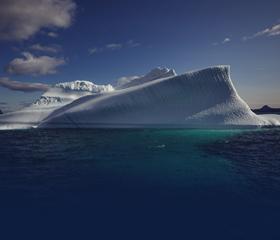
On the other pages we have explained what icebergs are and how to find them. In
this section we will explain why we need to know where they are and what they
are doing. Many commercial operation are conducted in the North Atlantic:
fishing, transportation, and oil exploration and production. All of these
activities require good up-to-date ice information if we are not to repeat the
mistakes of the past. In the case of fishing and transportation the vessels are
capable of moving out of the way of icebergs so it is sufficient to provide a
general area where icebergs are present. The mariners can then exercise the
required level of vigilance to avoid icebergs in their operations.
In the case of oil exploration and production the situation is
very different. Oil platforms either can't move or require a great deal of time
to move so the impact of icebergs on their operations is enormous and could
potentially cost millions of dollars. To avoid any risk of an iceberg colliding
with an oil platform it is important to know exactly where the icebergs are all
the time. It is also important to know which way they are drifting, and where
they will likely drift over the next few days. If the iceberg is drifting
towards the oil platform and the platform can't or does not want to move, then
the only remaining option is to move the iceberg and that's what ice management
is about.
Huge oil and gas reserves have been found beneath the Grand
Banks of Newfoundland. In fact there is enough oil to supply Canada's oil needs
well into the next millennium. While this is good news, for every up there's a
down. The Grand Banks is located in the middle of Iceberg Alley and also has one
of the world's harshest environments. Winter storms with winds of nearly 100 mph
can produce waves of 30 meters, and there is the ever present fog that can
reduce visibility to zero for days on end.
This is our back yard,
Provincial's Environmental Services Department works with the offshore oil
industry to minimize the amount of time spent avoiding environmental problems by
continually monitoring both the environment and the icebergs. Through the use of
sophisticated computer software and high tech sensors, we are able to provide
enough "lead time" to either manage the problem or conduct an orderly retreat.
Icebergs and the surrounding environment are inextricably
linked. Iceberg movement is affected by a host of phenomena, some measurable
some not. Trying to forecast an iceberg's movement over a long period is a
classic case for chaos theory (hence the butterfly on our logo). The best
solution so far is to carefully monitor the iceberg's track and the surrounding
environmental conditions over time. Then, using persistence models, forecast the
track into the future assuming that the berg will continue doing what it has
done in the past.
While this sounds straightforward enough is it not as
simple as it appears. To make this system work requires a lot of information on
iceberg distribution well upstream from the drilling area. Detailed iceberg
tracks must be established while the iceberg is still far enough away to attempt
towing operations. A standard question is "can you really tow such a huge
thing"?
Well perhaps towing is not really the correct word. While some small icebergs can literally be towed in pretty much
any direction you want, larger icebergs can be "steered" only about 20 degrees
either side of where it would drift naturally. However, as simple geometry
shows, a small change of angle maintained over a distance will result in a large
change in direction, and this is the principal of iceberg management.
If an iceberg is forecast to affect oil operations a powerful tug is dispatched to
hook up a tow rope and apply force in the direction you wish to steer the
iceberg. That small change of 10 - 20 degrees taken over perhaps 20 to 30 miles
will ensure the iceberg to passes safely by the platform. Simple, eh?
Well it would be if the environmental factors driving the iceberg remained constant over
the entire time the tow takes (which could be 24-72 hours). But nature doesn't
work like that, so the tow progress must be monitored carefully and the tow
heading and force adjusted to compensate for the environmental changes.
Taken one at a time the iceberg problem is usually quite manageable. Statistics
collected over that past 20 years show that 85% of iceberg tows are successful
in that the platform did not have to move. The problem is icebergs don't very
often come one at a time. They tend to arrive in waves of as many as a hundred
and it is not possible to tow all of them at the same time. To manage the
situation you need to establish general tracks on all the icebergs and detailed
tracks on any that show potential to disrupt operations. From these detailed
tracks you must select the bergs with the greatest probability of disruption and
tow them. So how do we do this?
For ice management purposes we divide the East Coast of Canada
into data areas as illustrated by the map on the left.
The Regional Zone to the north is used primarily for resource planning. That is, we assess the
iceberg distribution using information from general ice reconnaissance flights
and any other sources that may be available. Based on the distribution, we
assess the resources required to manage any potential iceberg problems in the
weeks to come.
The Confirmation Zone is used to establish accurate positions
and also to evaluate the physical characteristics of the icebergs. At this point
a tracking plan is constructed to obtain a general drift track on each iceberg
over the following week. Primarily this information is obtained by ice
reconnaissance aircraft.
The Tracking Zone is where we begin to build a track history for
each iceberg. This history consists of locating and positioning the icebergs
every couple of days. The tracks are then evaluated and potential problem
icebergs are identified. Potentially problematic bergs are forecast using
Provincial's ice management computer system . If the output shows that the berg
could affect operations, a tug is sent to perform a detailed survey of the
iceberg and monitor its drift. Once a detailed track is established the decision
whether or not to tow will be made based on the iceberg's track and the forecast
environmental conditions. The actual method used to tow the iceberg and the
effectiveness of the towing operation is continually evaluated and compared to
the amount of time available before the drilling rig must suspend operations and
prepare to either move or in some cases prepare for a controlled collision.
There are several methods of iceberg towing used depending on the type and size of the iceberg. However the most
common is the single boat floating line tow. This method has the tug deploy a
long floating tow rope behind the boat, then steam around the iceberg until the
tug can pick up the free floating end. It then connects the two ends of the tow
rope to it's main towing cable and slowly pays out the tow cable until the tug
is approximately a quarter of a mile away from the iceberg. At this time the tug
slowly applies tow force in the direction the berg is to be towed.
As many icebergs are inherently unstable tow force must be applied very slowly, if not
the iceberg will roll over which will probably result in the tow line coming off
the berg or worst becoming tangled which will require considerable time to be
spent to straighten out the tow line and repeat the connection again. Small
icebergs tend to be more unstable than large icebergs and the above water shape
of the iceberg plays a big part in its stability. To overcome this problem some
small icebergs are towed using a net, while other small icebergs are moved using
a method that doesn't use a rope at all. There are two non-rope methods
employed; Prop-washing, which uses the force of the vessels propellers to move
the iceberg in the opposite direction to the vessels heading. The other method
employs the vessels fire fighting water cannons, by directing a strong water jet
at the base of the iceberg it is possible to move the berg. Both methods require
the vessel to get very close to the iceberg to be effective.
A standard question is always "why don't you just blow them up?" well this approach has
been tried but it is a lot harder than people imagine. Icebergs are very hard,
the military have tried shelling and shooting torpedoes at them, both usually
result in the projectile just bouncing off. Experiments were conducted in the
80's that involved drilling into the iceberg and placing explosives inside. This
proved to be ineffective, because of the large amount of air bubbles in glacial ice
most of the shock from the explosions was absorbed with no noticeable effect on
the icebergs overall size. Even if this approach could be made to work the
result would likely be many small icebergs which would be more difficult to deal
with than the original large one.
Because many offshore oil fields have quite a lot of equipment on the ocean floor that could be damaged by deep draft
icebergs, there is some interest in trying to reduce the draft of large icebergs
with the use of explosives. This work is in the experimental planning stage and
there are many factors to be considered. Even if the draft reduction can be
accomplished, what will the effect of the many small pieces that result be on
other operations in the area and what would the effect of the explosion be on
the fish and mammals.
This has been a short overview of what ice management
is. there are many other factors associated with icebergs and management
techniques that we have not mentioned and to do so would fill many books. Ice
management is not an exact science and the learning curve continues to grow. The
golden rule of our work is to air on the side of caution, history is littered
with vessels that chose to ignore the environment around them. Our goal is
simple, to provide our clients with the information needed to make informed
decisions and avoid becoming a history lesson.
|
|
|
|
|
|